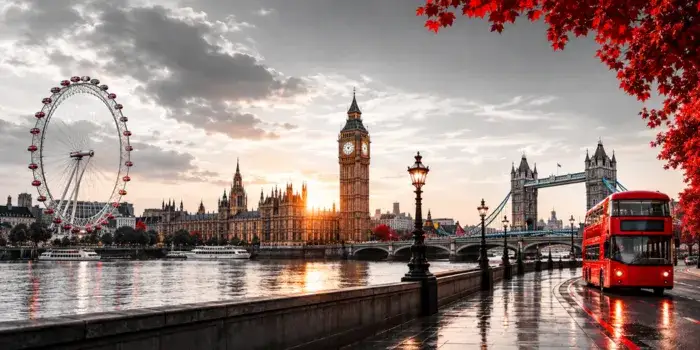
The City of Endless Stories
Discover iconic landmarks, hidden gems, local culture and the best experiences London has to offer.
Explore ArticlesYour Guide to London Travel, Culture & More
Get the latest travel tips, cultural insights, food recommendations and hidden gems from London. Whether you're planning your first trip or you're a local, you'll find something new to explore here.
Travel Tips & Itineraries
Make the most of your trip with our expertly curated travel guides, must-see attractions and day-by-day itineraries.
Read MoreFood & Culinary Experiences
From traditional British classics to hidden food spots, discover the best places to eat and drink in London.
Read MoreCulture, History & Heritage
Explore London's rich history, world-class museums, art galleries and cultural landmarks.
Read MoreHidden Gems & Local Vibes
Go beyond the tourist spots and find unique neighborhoods, secret places and local favorites.
Read MoreWelcome to London City Insights: Your Ultimate Guide
Welcome to London City Insights, the most comprehensive, meticulously detailed, and professionally curated resource dedicated entirely to the vibrant, historically rich, and endlessly fascinating capital of the United Kingdom. Whether you are an international traveler meticulously planning your very first cross-continental journey to the British Isles, an expatriate recently relocated and trying to navigate your new surroundings, or even a lifelong Londoner looking to rediscover the hidden corners of your own backyard, London City Insights stands as your definitive compass. London is not merely a geographic location on a map; it is a sprawling, living, breathing organism comprised of countless interconnected villages, each boasting its own distinct character, architectural identity, culinary scene, and historical narrative. Our mission is to unpeel the infinite layers of this magnificent metropolis, presenting you with actionable advice, profound cultural context, and an unquenchable passion for discovery.
The sheer scale of London can often feel overwhelming. Covering over six hundred square miles and home to nearly nine million people speaking over three hundred languages, the city is a global nexus of finance, fashion, art, politics, and gastronomy. It is a place where Roman ruins sit quietly beneath soaring glass skyscrapers, where centuries-old pubs rub shoulders with avant-garde Michelin-starred restaurants, and where the royal pageantry of Buckingham Palace contrasts beautifully with the raw, creative energy of street art in Shoreditch. Understanding this duality—the profound respect for heritage paired with an unstoppable drive toward the future—is the key to unlocking the true magic of London. Through London City Insights, we aim to bridge the gap between the familiar tourist trails and the authentic local experience, providing you with an encyclopedic repository of knowledge designed to elevate your time in the city from ordinary to extraordinary.
Chapter 1: The Iconic Landmarks That Define a Global Capital
To truly grasp the magnitude of London, one must begin with the monumental structures that have shaped its skyline and its history for generations. These landmarks are not just brick and stone; they are the physical manifestations of the city's triumphs, tragedies, and enduring resilience.
The Tower of London: A Fortress of Blood and Gold
Standing ominously on the north bank of the River Thames, the Tower of London is arguably the most historically significant monument in the country. Founded by William the Conqueror in 1066 as a bold statement of Norman power, the White Tower—the central keep—has served a multitude of purposes over its nearly millennium-long existence. It has been a royal palace, a formidable defensive fortress, the home of the Royal Mint, an armory, a public records office, and, most infamously, a brutal prison and place of execution for high-profile figures. The list of illustrious prisoners held within its thick stone walls includes Anne Boleyn, Catherine Howard, Sir Walter Raleigh, and even a young Princess Elizabeth before she became Queen.
Today, the Tower of London is a UNESCO World Heritage site and a premier destination for visitors. A visit here is incomplete without joining a guided tour led by the Yeoman Warders, affectionately known as Beefeaters. These charismatic military veterans bring the dark and complex history of the Tower to life with gripping tales of royal betrayal, daring escapes, and the tragic fate of the Princes in the Tower. Beyond the history of incarceration, the Tower is also the heavily guarded repository of the Crown Jewels, an awe-inspiring collection of 23,578 gemstones that remain in active use by the British monarchy today. Seeing the Imperial State Crown and the Sovereign's Sceptre containing the colossal Cullinan I diamond is an experience that underscores the immense wealth and enduring tradition of the British crown.
The Majesty of Westminster: Big Ben and Parliament
Moving westward along the Thames, you encounter the political heart of the United Kingdom: the Palace of Westminster and the iconic Elizabeth Tower, globally recognized as Big Ben. The neo-Gothic splendor of the Houses of Parliament, masterfully designed by architect Charles Barry with meticulous detailing by Augustus Pugin, was constructed in the mid-19th century following a devastating fire that destroyed the medieval palace. The only significant structures to survive that inferno were the Jewel Tower, the cloisters of St Stephen's, and the magnificent Westminster Hall, which dates back to 1097 and features a breathtaking hammer-beam roof.
Big Ben, specifically referring to the 13.7-ton Great Bell housed within the belfry, chimes with a resonance that is synonymous with London itself. Recently emerging from an extensive, multi-year conservation project, the tower now gleams with its original Victorian color scheme, a stunning display of Prussian blue and gold that has breathed new life into the structure. Observing the sun set behind the silhouette of Parliament from the opposite bank of the river, or from the deck of Westminster Bridge, is a quintessential London City Insights experience that never fails to inspire awe.
The Spiritual Centers: Westminster Abbey and St Paul’s Cathedral
Just steps away from Parliament stands Westminster Abbey, a masterpiece of Gothic architecture and the site of every English and British coronation since 1066. The Abbey is a living pageant of British history, serving as the final resting place for seventeen monarchs, as well as an incredible array of national figures including Isaac Newton, Charles Darwin, Geoffrey Chaucer, and Charles Dickens. Walking through its soaring nave, surrounded by ornate marble monuments and the ethereal light filtering through stained glass, offers a profound connection to the figures who shaped not just Britain, but the modern world.
In contrast to the Gothic intricacies of the Abbey stands the majestic Baroque dome of St Paul's Cathedral in the City of London. Designed by the visionary architect Sir Christopher Wren as part of the massive rebuilding effort following the Great Fire of London in 1666, St Paul's has stood as a symbol of the city's unyielding spirit for over three centuries. The cathedral miraculously survived the intense bombing of the Blitz during World War II, its dome emerging from the smoke as an emblem of hope. Visitors who possess the stamina to climb the 528 steps to the Golden Gallery at the very top of the dome are rewarded with one of the most spectacular, unobstructed panoramic views of the London skyline available anywhere in the city.
Chapter 2: A Cultural Odyssey - Museums and Galleries
London's cultural institutions are without parallel. Benefiting from a long-standing national policy that ensures free entry to the permanent collections of state-sponsored museums, the city offers residents and visitors alike an unparalleled opportunity to engage with global art, history, and scientific discovery. London City Insights strongly encourages setting aside ample time to explore these vast repositories of human achievement.
The British Museum: The Chronicle of Humanity
Established in 1753, The British Museum is a colossus. It was the first national public museum in the world, and today its vast permanent collection numbering some eight million works spans the entirety of human history, art, and culture. The architecture of the building itself is stunning, particularly the Great Court, designed by Norman Foster, featuring a magnificent glass tessellated roof that beautifully unifies the museum's disparate wings. The treasures within are staggering in their historical weight. The Rosetta Stone, the key to deciphering ancient Egyptian hieroglyphs, draws crowds daily. The Parthenon Sculptures offer a breathtaking glimpse into the pinnacle of classical Greek artistry. Further exploration reveals the intricacies of the Sutton Hoo ship burial, providing vital insights into Anglo-Saxon England, alongside extraordinary collections of Assyrian reliefs, Egyptian mummies, and the Lewis Chessmen. Due to its sheer size, attempting to see the entire museum in a single day is an exercise in futility; we recommend focusing on specific regions or eras to truly appreciate the depth of the exhibits.
The National Gallery and Tate Modern: A Tale of Two Eras
For lovers of fine art, London offers a journey from the early Renaissance to the cutting edge of contemporary installations. The National Gallery, occupying the prestigious northern terrace of Trafalgar Square, houses the national collection of Western European paintings from the 13th to the early 20th centuries. It is a place where one can stand inches away from the genius of Leonardo da Vinci, marvel at the vibrant impasto of Vincent van Gogh's Sunflowers, and lose oneself in the atmospheric landscapes of J.M.W. Turner. The gallery’s layout allows for a chronological journey through the evolution of painting, making it an essential destination for art scholars and casual admirers alike.
Across the river, housed in the cavernous, industrial shell of the former Bankside Power Station, lies the Tate Modern. Since opening in the year 2000, it has revolutionized the public's engagement with modern and contemporary art. The vast Turbine Hall serves as an epic canvas for large-scale, site-specific installations that challenge perceptions and provoke intense public discourse. The permanent galleries house monumental works by Pablo Picasso, Mark Rothko, Salvador Dali, and Andy Warhol. The raw, brick-and-steel aesthetic of the building provides the perfect counterpoint to the art within, establishing the Tate Modern as the undisputed beating heart of London's contemporary cultural scene.
The Exhibition Road Triumvirate: Science, Nature, and Design
In the affluent borough of South Kensington, along the famous Exhibition Road, sit three world-class museums dedicated to the understanding of the natural world, human ingenuity, and applied arts. The Natural History Museum, housed in a breathtaking Romanesque Revival building that is an architectural masterpiece in its own right, takes visitors on a journey through the evolution of life on Earth. Its dinosaur skeletons and a massive model of a blue whale are iconic, but its vast geological and entomological collections are equally fascinating. Adjacent is the Science Museum, a celebration of technological progress, featuring Stephenson's Rocket, the Apollo 10 command capsule, and interactive exhibits that inspire the next generation of engineers. Completing the trio is the Victoria and Albert Museum (V&A), the world’s leading museum of art, design, and performance. With collections encompassing thousands of years of fashion, textiles, ceramics, glass, and sculpture, the V&A is a testament to the endless boundaries of human creativity.
Chapter 3: The Culinary Revolution of London
For decades, British cuisine suffered from an unfair reputation globally. However, the last thirty years have witnessed a gastronomic revolution that has fundamentally transformed London into one of the most exciting, dynamic, and diverse food capitals on the planet. London City Insights has meticulously chronicled this evolution, guiding you through a landscape where traditional fare has been elevated to an art form and international flavors are celebrated with absolute authenticity.
The Reinvention of the British Classic
The staple of British comfort food, Fish and Chips, is experiencing a renaissance. While neighborhood 'chippies' remain an essential part of local life, esteemed establishments have elevated the dish using sustainably sourced, premium Atlantic cod and haddock, encased in light, crispy batters often incorporating craft beer or cider. The accompanying chips are double or triple-cooked in beef dripping for a perfect crunch, served alongside homemade tartare sauce and traditional mushy peas.
Similarly, the Sunday Roast—a hallowed British weekend tradition—has been perfected across the city's thousands of pubs. A proper London roast involves a generous cut of slow-roasted beef, tender lamb, or succulent pork belly with perfectly crisp crackling. This is accompanied by towering, golden Yorkshire puddings, a medley of roasted root vegetables, and a rich, deeply flavored gravy. Gastropubs have taken this tradition and infused it with Michelin-level culinary techniques, turning a simple weekend meal into a decadent dining experience.
No discussion of British food is complete without Afternoon Tea. Originating in the 19th century as a way for the aristocracy to stave off hunger between lunch and a late dinner, it has evolved into a luxurious ritual. At renowned establishments such as The Ritz, Claridge's, and The Savoy, patrons are treated to an exquisite selection of finely cut finger sandwiches, warm scones accompanied by rich Cornish clotted cream and strawberry preserve, and an array of delicate, handcrafted pastries, all washed down with the finest loose-leaf teas sourced from around the globe.
A World of Flavors: Street Food and Global Cuisine
The true diversity of London is perhaps best experienced through its street food markets. Borough Market, nestled near London Bridge, is an ancient trading site that has morphed into a paradise for food lovers. Here, artisanal cheese makers stand next to vendors selling freshly shucked oysters, while the aromas of Spanish paella, Thai green curry, and slow-roasted meats fill the air. It is a place of sensory overload in the best possible way.
Camden Market offers an edgier, highly international food scene, reflecting the bohemian spirit of the area. Visitors can sample authentic Colombian arepas, Japanese takoyaki, vegan junk food, and traditional Ethiopian stews, all within a few feet of each other. Meanwhile, smaller, curated markets like Maltby Street Market in Bermondsey provide a more intimate setting, tucked beneath Victorian railway arches, offering boutique wines, craft gins, and gourmet street food to a discerning local crowd.
Beyond the markets, London's restaurant scene spans the globe. Soho’s Chinatown offers exceptional Cantonese roasted meats and regional Chinese delicacies. The neighborhoods of Brick Lane and Whitechapel are legendary for their Bengali and Indian curry houses, offering robust, heavily spiced dishes that have become a fundamental part of the British diet. High-end Indian dining has also seen a surge, with restaurants redefining subcontinental cuisine with extraordinary finesse. For Middle Eastern flavors, the Edgware Road provides endless options for Lebanese mezze, while the explosion of authentic Italian, Spanish tapas, and modern Japanese restaurants ensures that whatever you are craving, London can provide it at the highest level of quality.
Chapter 4: Navigating the Urban Tapestry
Understanding how to move through London efficiently is crucial to maximizing your experience. The city’s public transport network is vast, intricate, and deeply integrated into the daily rhythm of London life. London City Insights provides the essential knowledge required to traverse the city like a seasoned local rather than a bewildered tourist.
Mastering the London Underground
The London Underground, affectionately known universally as the Tube, is the world's oldest subterranean railway network, having commenced operations in 1863. Today, it is a staggering feat of engineering, comprising 11 interconnected lines that serve 272 stations across the Greater London area. For the uninitiated, the iconic, multicolored Tube map, designed by Harry Beck in 1931, is a masterpiece of information design, prioritizing topological clarity over geographical accuracy.
The most important advice we can impart regarding the Tube is to utilize an Oyster card or simply use a contactless credit, debit card, or mobile payment device. The system automatically calculates the cheapest possible fare for your journey and applies a daily price cap, meaning you will never be charged more than the cost of a daily travel card, no matter how many times you tap in and out. Furthermore, adhering to Tube etiquette is paramount: always stand on the right on escalators to allow hurried commuters to walk on the left, move down inside the carriages to create space, and allow passengers to exit the train completely before attempting to board.
The Iconic Red Buses and the River Thames
While the Tube is the fastest way to cover long distances, London's iconic red double-decker buses offer a much more scenic and relaxing mode of transport. Sitting at the very front of the upper deck provides an unparalleled, elevated view of the city streets, making it an incredibly cost-effective sightseeing tour. Routes such as the number 11, 15, and 24 pass by many of the city's most famous landmarks, offering fantastic photographic opportunities from the comfort of your seat.
The River Thames, historically the main thoroughfare of the city, remains a brilliant way to travel. The Thames Clippers, heavily branded as the Uber Boat, provide fast, comfortable catamaran services that link major piers from Putney in the west all the way to Greenwich and Woolwich in the east. Gliding past the Houses of Parliament, beneath the spans of the Millennium Footbridge, and through the opening of Tower Bridge provides a unique, traffic-free perspective of London's architectural majesty.
The Joy of Walking London
Despite its massive size, central London is surprisingly walkable. In fact, due to the density of the streets and the sometimes convoluted nature of the Tube lines, walking is frequently faster than taking public transport between certain adjacent stations (for example, the walk between Leicester Square and Covent Garden takes barely five minutes). Walking allows you to stumble upon the hidden alleyways, quiet garden squares, and unexpected historical plaques that make London so magical. Strolling along the South Bank from Westminster to Tower Bridge is one of the world's great urban walks, offering a constantly shifting panorama of the city's skyline.
Chapter 5: Unearthing the Hidden Gems
While the major landmarks draw the crowds, London City Insights believes that the true soul of the city is found in its lesser-known, hidden corners. These are the places where history whispers rather than shouts, where locals escape the tourist hordes, and where the eccentric, quirky nature of London truly shines.
The Tranquility of the Secret Gardens
London is astonishingly green, with nearly 47% of the city classified as green space. Beyond the vast Royal Parks lies a network of hidden gardens. The Kyoto Garden in Holland Park is a breathtaking oasis of Japanese landscaping, complete with a tiered waterfall, stone lanterns, and roaming peacocks. In the heart of the financial district, the ruins of St Dunstan-in-the-East offer a profoundly peaceful retreat. The church was largely destroyed during the Blitz, and rather than rebuilding, the ruined walls were transformed into a public garden where vines climb the Gothic stonework and benches are nestled among the nave.
Further afield, the Chelsea Physic Garden, established in 1673 by the Worshipful Society of Apothecaries, is London’s oldest botanical garden. Hidden behind high brick walls near the Thames, it houses an extraordinary collection of medicinal, herbal, and edible plants, offering a fascinating glimpse into the history of botanical science and natural healing.
Eccentric Museums and Historical Time Capsules
For those looking to step off the beaten cultural path, London delivers in abundance. Sir John Soane’s Museum, located in Lincoln's Inn Fields, is the preserved home of the eccentric 19th-century architect. The house is a labyrinth of classical sculptures, architectural models, and paintings (including works by Canaletto and Hogarth), packed from floor to ceiling. The architectural tricks, hidden panels, and the breathtaking sarcophagus of Seti I in the basement make this a truly unique, immersive experience.
Dennis Severs' House in Spitalfields takes immersion even further. This is not a standard museum, but a 'still-life drama'. The rooms of this historic terraced house have been meticulously dressed to recreate the lives of a fictional family of Huguenot silk weavers from the 18th to the 20th centuries. Visitors walk through the house in total silence, surrounded by the smells of open fires, half-eaten meals, and unmade beds, creating an eerie, deeply emotional connection to the past. It is an artistic masterpiece that defies categorization.
The Magic of London's Waterways
While the Thames dominates the geography, London’s canal network offers a totally different vibe. The area of Little Venice in Maida Vale, where the Grand Union Canal meets the Regent's Canal, is a picturesque neighborhood of colorful narrowboats, waterside cafes, and tree-lined towpaths. Walking the canal path from Little Venice, through the northern edge of Regent's Park (where you can glimpse the animals of London Zoo), and into the bustling, punk-rock atmosphere of Camden Lock, is a fantastic way to spend a Sunday afternoon. For a truly unique experience, you can hire a self-drive electric boat or join a guided narrowboat cruise to view the city from the tranquility of the water.
Chapter 6: A Year in the Life - Seasonal London
London is a city that shapeshifts with the seasons, each bringing its own distinct atmosphere, festivals, and traditions. London City Insights ensures you know exactly what to experience, regardless of the month you choose to visit.
The Blossoming Spring
Spring in London is a period of vibrant renewal. The grey skies lift, and the city's parks erupt in color. The cherry blossoms in Greenwich Park and Kew Gardens draw massive crowds, providing stunning photographic backdrops. May is undoubtedly the month of flowers, highlighted by the prestigious RHS Chelsea Flower Show, an event that transforms the affluent neighborhood of Chelsea into a floral wonderland, with local shops and restaurants competing in elaborate floral display competitions. Sporting enthusiasts also look forward to the London Marathon in April, an event that turns the city streets into a massive, jubilant street party supporting thousands of charitable causes.
The Golden Summer
Summer is when London truly relaxes. The long days, with sunset often occurring after 9 PM, mean the city’s pub gardens, rooftop bars, and riverside terraces are packed with people soaking up the sun. Summer is festival season; Hyde Park hosts massive outdoor concerts, while the Notting Hill Carnival in late August takes over the streets of West London in a spectacular, colorful, and bass-heavy celebration of Caribbean culture. The BBC Proms bring world-class classical music to the Royal Albert Hall, and tennis fans from around the globe descend upon the manicured grass courts of Wimbledon, bringing with them the tradition of strawberries and cream.
The Crisp, Colorful Autumn
As the air turns crisp, London's parks put on a spectacular display of autumnal foliage. Walking through Richmond Park amidst the turning leaves and the rutting season of the resident deer herds is a magnificent experience. Autumn also marks the beginning of the city's intense cultural season, with major new exhibitions opening across the galleries and the highly anticipated London Film Festival bringing Hollywood glamour to the West End. November 5th brings Guy Fawkes Night (Bonfire Night), where the skies across the city are illuminated with massive fireworks displays and bonfires to commemorate the failed Gunpowder Plot of 1605.
The Magical Festive Winter
Winter transforms London into a festive fairy tale. From mid-November, the famous shopping streets of Oxford Street, Regent Street, and Carnaby Street are draped in elaborate Christmas light displays. Outdoor ice-skating rinks appear at iconic locations like Somerset House, the Natural History Museum, and Hampton Court Palace. Hyde Park is taken over by Winter Wonderland, a massive festive fairground and market. The atmosphere in the historic pubs, with crackling open fires and mulled wine, offers the perfect respite from the cold, making winter an incredibly romantic and atmospheric time to explore the capital.
Conclusion: The Endless Journey
To summarize London in a single article, even one as extensive as this, is an impossible task. It is a city of a million stories, constantly writing new chapters while fiercely guarding its ancient past. Samuel Johnson famously declared in 1777, "When a man is tired of London, he is tired of life; for there is in London all that life can afford." Centuries later, this sentiment remains as fiercely accurate as ever.
London City Insights is dedicated to being your trusted companion on this endless journey of discovery. We invite you to step outside your comfort zone, to walk down the streets you haven't explored, to taste the foods you've never heard of, and to immerse yourself entirely in the glorious, chaotic, beautiful symphony that is London. The city is waiting. Let the exploration begin.